
Table Talk Newsletter Issue # 29
Join Us for Table Talk Thursdays! American Sign Language (ASL) Available at all Monthly Table Talk Meetings! WHO: Your OPS Unified bargaining team invites all Unified members to join Table Talk Thursdays. WHAT: Table Talk Thursdays are monthly Zoom sessions where the bargaining team shares updates, answers questions, and provides insight into ongoing negotiations and union activities.…




Bargaining resources
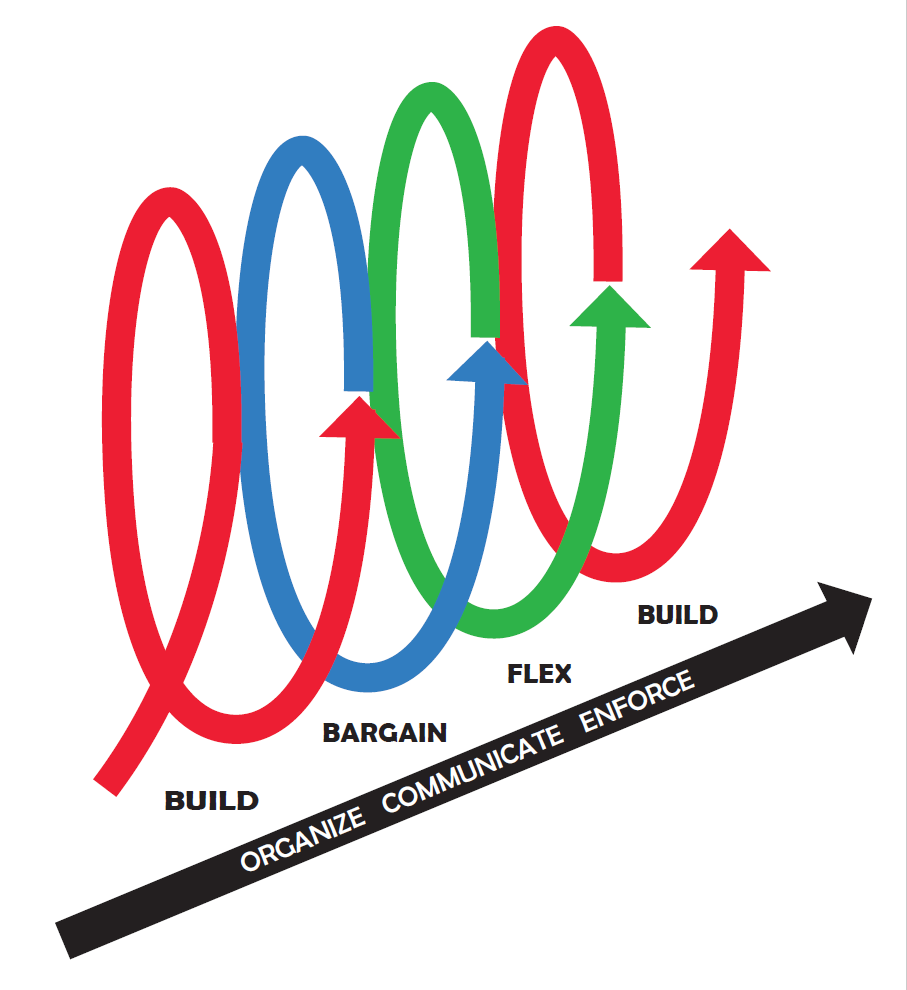
The North Star: Build bargaining power through organizing
To get the best possible agreement, we show the employer that we have the power to make our demands. We do this by bringing together as many workers as possible.
Our power shows the boss that we will go on strike if necessary.
Bargaining Timeline Guide
Phase One: BUILD
- Build the elected leadership of the bargaining unit and gain their trust to implement the organizing model.
- Provide guidance to elected leaders as they identify organic leaders, conduct one-on-one organizing conversations and get them involved in the bargaining campaign. Include an equity lens to recruit organic leaders. Some organic leaders may already be stewards, some may not be involved with the union at all.
A: Goal for small units: Engage all members.
B: Goal for medium/large units (100 plus members): Engage 50 per cent plus one of the members.
C: Goal for central tables and coordinated bargaining campaigns: Engage 90 per cent of all members.
- Review bargaining procedures with the elected leadership (if applicable). Ensure they are consistent with an organizing model of bargaining.
- Provide mapping training to elected bargaining unit leaders. Guide elected leaders in mapping the bargaining unit: Categorize by job classification, job status, demographics; identify leaders from all job categories; include Black, Racialized and Indigenous workers, and all demographic groups.
- Build a strategic plan together with the elected leaders: What’s at stake? What are we fighting for? What will it take to win? Assess our current power in the workplace and the community. Develop a bargaining cycle timeline. Identify what resources we need.
- Sign up members, push for personal email addresses and cell numbers.
- Collect employer documents: May include seniority lists, shift records etc.
- Establish date of last leadership elections and next leadership election dates
- Run structure tests to quantify member engagement.
- Review GMM attendance to set engagement baseline. Set up protocols for assessing structure test results.
- Encourage elected leaders to bring forward bargaining team candidates from full diversity of organic leaders.
- Hold elections for bargaining team and alternates.
- Establish bargaining committee teams: Include committees for communications and organizing; include equity seeking members in a meaningful way.
- Encourage clear and transparent communications.
- Explore open bargaining protocols.
- Provide bargaining team training. Include bargaining team members, alternates and organic leaders; include embedded anti-racism and organizing principles and tools.
Phase Two: BARGAIN
- Notice to Bargain (prepared by the Regional Office Secretary): File up to 90 days before expiry of the collective agreement
- Send request for disclosure:
A: Financial and organizational disclosure – budget, unfilled positions etc.
B: Employee list – including department, classification, location, address, mobile, email etc.
- Demand set survey process – Goal: reach a large majority of the members. Compile proposed demands and distribute to the members. Review bargaining strategy including strengths, weaknesses, opportunities and threats.
- Demand set meeting – determine top demands and member commitment to those demands. Frame the fight.
- Draft the union proposals. Review the proposals with the bargaining team. Assemble the union proposals document. Have proposals vetted (if applicable).
- Set times, dates and location for bargaining. Encourage in-person bargaining to build bargaining team trust relationships.
- Encourage bargaining team to share the proposals with the members.
- Ensure regular and transparent communications with members about what is happening at the table. Have bargaining team draft bargaining bulletins. Involve bargaining team, alternates and organic leaders in ensuring communication with workers.
- Ensure there is inoculation about what the employer might do to divide the members. Include hope in the messaging -if we stick together, we can make gains.
10. Bargaining – at the table
- Prepare for a strike. Do strike timing analysis based on structure test participation outcomes. NOTE: If the bargaining unit moves towards a strike, notify your Supervisor. Encourage organizing conversations prior to strike vote.
- Strike vote: Structure test – analyze participation results.
- If employer refuses top core demands, file for conciliation.
14. Conciliation: Bargaining with assistance from a Conciliator.
- Establish strike committees and conduct picket training. Determine picket locations and strategy. Refer to the Strike Manual.
- No Board Report: Start 17 days countdown to strike/lockout deadline.
- Return to the table OR legal strike or lockout.
19. Negotiate tentative agreement. Establish return to work protocols with the employer.
18. Ratification meeting and communications.
19. New collective agreement
Phase Three: FLEX
- Debrief the bargaining process: Identify possible improvements and document strategy for future rounds
- Enforce the new collective agreement together with key elected leaders and all organic leaders.
- Communicate victories and celebrate achievements.
- Welcome and inoculate new workers.
- Continue to build worker power through organizing and creative actions. Ensure continued engagement of the organic leaders. Encourage strong elected leadership team and steward structure. Encourage broad involvement in the labour movement.