
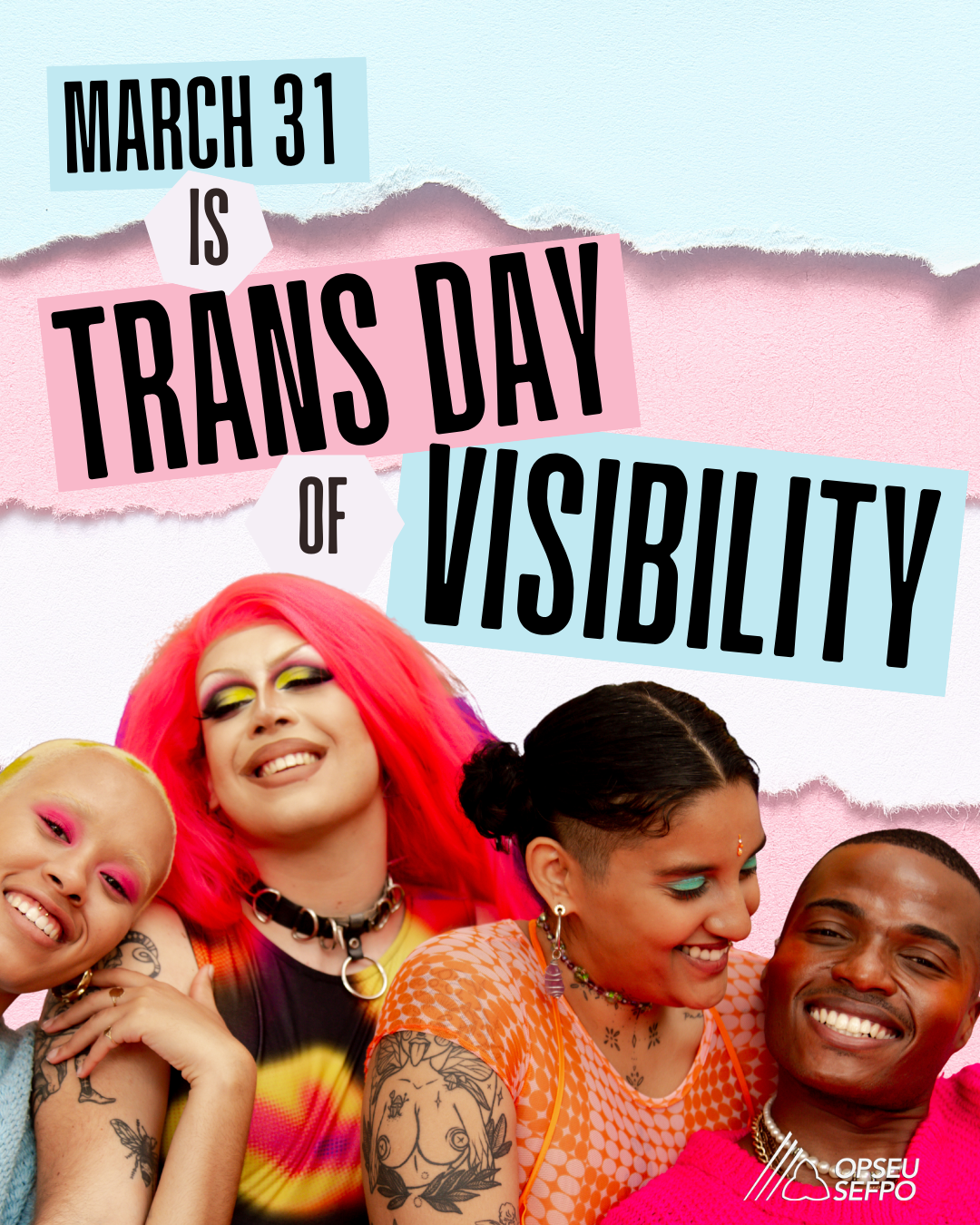
When transgender activist and psychotherapist Rachel Crandall-Crocker started Trans Day of Visibility (TDOV), she did so because she wanted to create a day where trans people “could all be together and be proud of being trans.”
Prior to TDOV, the only day that publicly centered trans people was the Trans Day of Remembrance (November 20), an important day of mourning. However, as Crandall-Crocker recalls in a recent interview, “I really wanted a day that we could focus on the living.”
And so, with that intention, Crandall-Crocker posted the unassuming message “TDOV” on social media, unaware that she was sparking an international movement.
Since that initial post in 2009, TDOV has steadily grown in popularity. Now, every March 31, trans people and their allies gather in community, in workplaces, and online to celebrate trans joy, trans contributions, trans resilience, and the fullness of trans lives.
To celebrate trans visibility in a society so prone to trans erasure and oppression is a deeply political act. It can raise awareness, combat stigma and misconception, and effect change. However, visibility is not an option for all trans people. In fact, for many trans people, visibility carries tremendous personal and professional risk.
Thus, the call to action of this beautiful and necessary day is two-fold. While TDOV is a day to amplify and celebrate trans voices, support trans-led organizations, and for allies to educate themselves, it is also reminder to fight for a world built not only on trans visibility but also trans liberation.