

By Angie Speers, Local 684, InSolidarity Committee
The flags in Sault Ste. Marie flew at half-mast on Tuesday, April 28, 2026, to honour, recognize, and remember those who’ve been killed, hurt, or made sick at work.
The Sault Ste Marie and District Labour Council hosted this year’s event at Grand Gardens Downtown – the theme was Psychological Health and Safety.
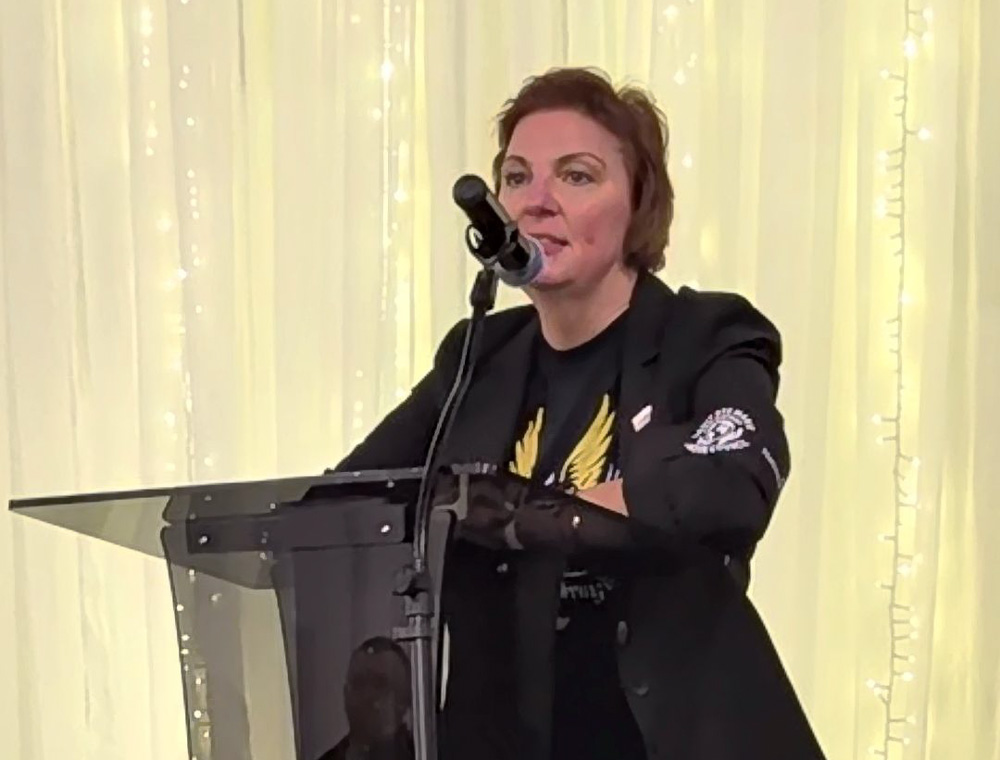
District Labour Council President and Region 6 Executive Board Member Tara Maszczakiewicz emceed the event. Tara is a member of OPSEU/SEFPO Local 684, and a registered social worker who has been at Algoma Family Services for over 35 years.
“There is no health without mental health,” said Tara. “Violence and injury in our workplaces affect all workers’ mental health, especially when the response from the employer, who is supposed to help protect you, is minimal or absent.”
Unions can and must make workplaces safe
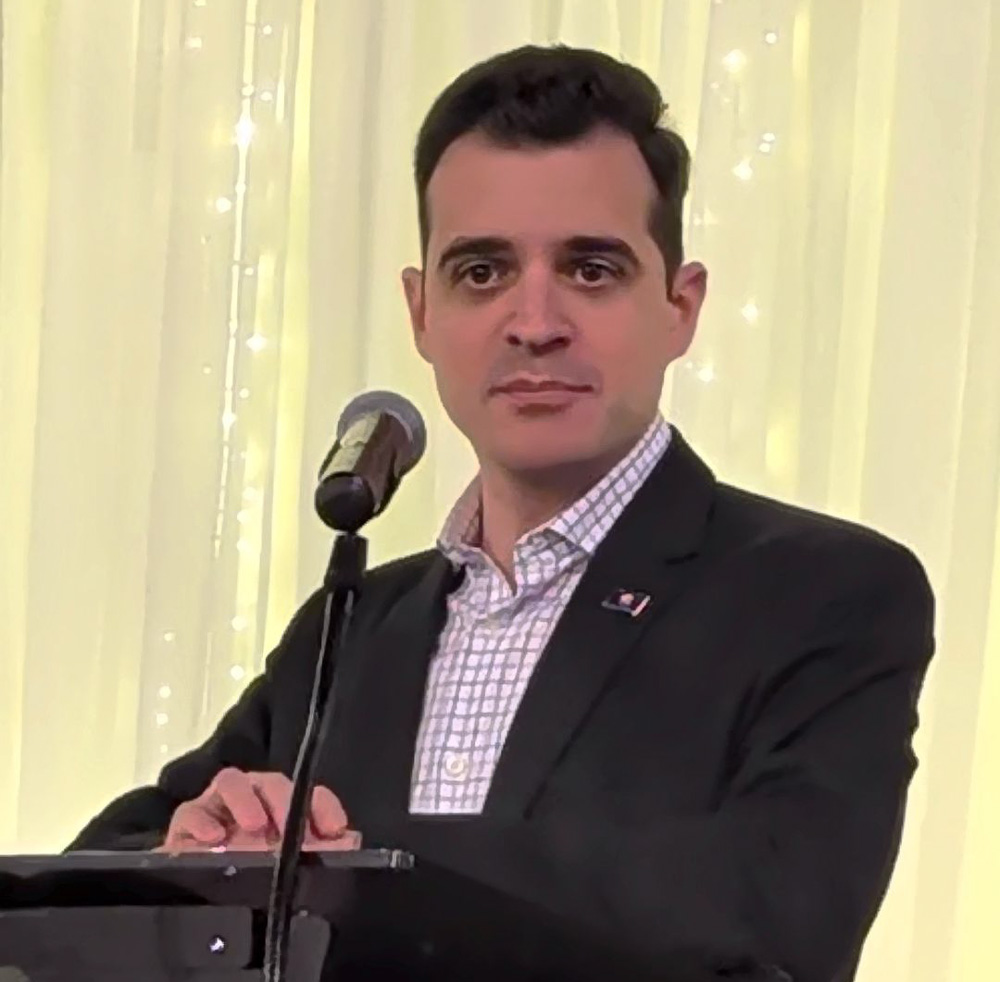
Sault mayor Matthew Shoemaker highlighted the key role unions play in making safer workplaces.
“Workplace tragedy leaves a lasting mark on every community and Sault Ste Marie has experienced loss first-hand. Behind every incident is a family changed forever, a workplace changed forever, children without parents, parents mourning their children, colleagues carrying the absence of their friends and coworkers,” Shoemaker said.
“The progress that has been made in workplace safety has not happened by good luck — it has happened because of the critical role that unions have played. The data is clear: unionized workplaces are safer.”
“The protections that many workers rely on exist because people organized, spoke up, and refused to accept unsafe conditions.”
Mayor Shoemaker also said: “Work shapes our lives in meaningful ways. Most people begin their day expecting that they will return home from work safely. That outcome needs more to depend on than just hope. While risks vary by sector, vigilance is required everywhere. Creating safer workplaces is a shared responsibility.”
Correctional Officer Tyson Marcinkowski spoke next, passionately calling all workers to action.
“Every name we honour today represents a failure — a failure of a system that did not do enough to protect them. That is why we stand here to mourn those who were killed, and to fight for the living to ensure that those failures are fixed,” said Tyson, who is a member OPSEU/SEFPO Local 678 and is also vice-chair of the Ministry of the Solicitor General’s Provincial Joint Occupational Health and Safety Committee as well as the Occupational Stress and Injury Committee.


“For many workers the risks are physical but in Corrections, like other public safety occupations, many of the dangers are not. Correctional officers work in environments defined by constant tension, violence, unpredictability, and every shift demands vigilance; every interaction carries potential risk and over time the repeated exposure to that work takes a toll. Not just physically but psychologically.”
Mental illness – “We cannot prevent what we refuse to acknowledge”
“Since 2021, at least 11 Correction Officers were lost to suicide, possibly more. Due to the stigma of mental health and suicide many people do not reach out for help and suffer in silence.”
Tyson also said: “We cannot prevent what we refuse to acknowledge, and prevention is what this day is truly about. And what does prevention look like in Corrections? It means recognizing some psychological injuries are preventable. It means addressing chronic understaffing that leaves offices working in constant crisis. It means listening to Correctional Officers and acting upon what they are telling us – they know the risks better than anybody else. It means ensuring access to meaningful mental health treatment and support at no cost to workers.“
“Correctional Officers are not asking for an easy job, they are asking to go home at the end of their shifts physically and mentally healthy.”
“Today we honour our colleagues, those who are gone, and those who continue to carry the weight of the work every single day. Remembrance alone is not enough, we must leave here committed to action, committed to safer workplaces, committed to fulsome mental health supports, and committed to ensuring that no worker is forgotten, because every worker matters, every life matters, and everyone deserves to come home.”
The last speaker of the day was USW Local 2251 member Mike Da Prat. As in jails, he said that the mental health and safety of factory workers is rarely taken into account.
“We need to lobby our government to make sure that mental health is not just a phrase, that we have legislation that states that mental health is real, that they need support and that the support they need is different from the physical. So when you go back to work, take the time to send an email to try to get that.”
Don’t stay silent – call for support
If you are struggling with Mental Health concerns, do not stay silent. Reach out for help.
If you are in crisis please contact 911 or crisis services in your area. You are not alone.
- You can contact 211 and they will help guide you to the services that you need.
- The National Suicide Prevention Hotline is 988 and can be reached 24/7.
- Badge of Life is for First Responders, but will never turn away any worker.