Did You Know?! – Black History Month Series Part 2: Black History Month: A Journey of Understanding and Celebration
February 19, 2025
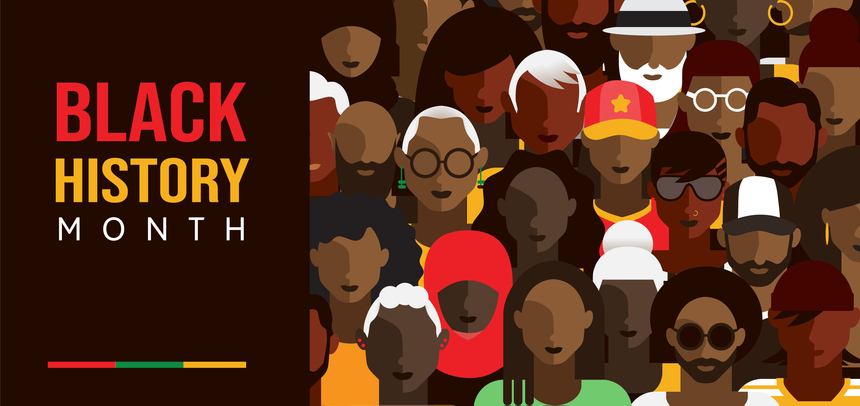
Vector illustration of a Black History Month February concept. Horizontal banner design
Hello everyone! I hope you’ve been enjoying the content shared so far! I’ve received some truly uplifting feedback from many of you, and I’m genuinely grateful for it. As we near the final stretch of February, I hope that you’ve all taken the time to reflect, celebrate, and learn about Black history and culture with your fellow Black union siblings.BlackHistoryMonth is a time for deep reflection and meaningful action. It’s not just about expressing excitement or giving surface level understanding of what it means to be Black. Often, Black people, myself included, have expressed our discomfort with how Black History Month is observed — particularly because it can feel like a fleeting moment. From February 1st to February 14th, we see an outpouring of allyship, recognition and support. But after Valentine’s Day passes, it feels like the conversation is dropped, and suddenly, we’re looking forward to St. Patrick’s Day. What about the other 14 days of the month? What about the remaining 351 days of the year? A question that is often asked is why is Black History Month reduced to just 28 days, the shortest month of the year? In my conversations with others, I’ve realized that there’s often a lack of understanding around why BHM falls in February, with many seeing it as a way to appease Black people — a token month to end complaints, as if we should be satisfied with a mere 28 days of recognition.
“Only 28 Days?!?” I know, I know, keep reading!
Dr. Carter G. Woodson broadened public awareness to the impact of black Americans on our nation’s history by starting Negro History Week in 1926. This later became Black History Month, celebrated every February.”Have you heard of a Man named Carter G. Woodson!? Many haven’t, but you gon’ learn today! Carter G. Woodson, a historian and scholar, is known as the “Father of Black History”. The first official acknowledgement of Black History began in 1926 by Mr. Woodson and the Association for the Study of African American Life and History (ASALH). They established NegroHistoryWeek to highlighting the contributions of Black people (at that time referred to as “Negros”) throughout history. Woodson chose the second week of February because it coincided with the birthdays of two important figures in the fight for Black rights and freedoms: Abraham Lincoln born February 12th and Frederick Douglass born February 14th.Over the years, Negro History Week garnered a lot of attention and in the late 1960s, during the Civil Rights Movement, there was a demand to expand the observance. This was granted in 1976 as part of the United States’ bicentennial celebrations, President Gerald Ford officially recognized February as Black History Month, recognizing the achievements of Black Americans.However, for those of us who live in Canada, Black History Month has a unique context. For years, the contributions of Black Canadians have been overshadowed by the dominant American narrative of Black history. But in reality, Black history in Canada is rich and deeply embedded in the fabric of this country, with Black Canadians playing an integral role in shaping the history and culture of this land.Canada’s recognition of Black History Month is a direct result of the tireless work of our community leaders, educators and organizations. In 1995, the House of Commons officially recognized February as Black History Month, thanks to the advocacy of Dr.DanielG.Hill, a prominent civil rights activist and former chair of the Ontario Human Rights Commission. His efforts emphasized the importance of recognizing the contributions and struggles of Black Canadians. As Union members in Ontario, it’s essential to remember the unique struggles that have shaped the experiences of Black Ontarians, who, like many Black people worldwide, have faced systemic discrimination and fought for justice.
Fun facts: Black History Month Around the World
Many of us know Black History Month to be acknowledged in February, but due to the differences in local history and cultural context, not all countries observe it during this time. For example, in the United Kingdom, they recognize Black History Month in October. This began in 1987 with celebration of Caribbean history and culture. The Republic of Ireland also shares the same month of October as a month of recognition for Black History. This observance emphasizes the role of Black Irish people and the African and Caribbean diaspora contributions to Irish culture.Finally in the Netherlands, things are done differently. While not an official month long observance, Black History Month is observed during December, aligning with European celebrations of international Black history and culture.Information overload, I know! This truly shows the diversity in observance and reflects the global nature of Black history and culture — one that is not confined to one month or even one country. The idea that “Black History Month is 365 a year” isn’t just a thing Black people say; it’s a reality. The stories, struggles, success and contributions of Black people span beyond a 28-day period and it’s important that we continue to engage with and learn about this history year-round.As I continue on this journey with you, I am reminded of the power of learning and sharing history. These articles can’t cover the entire scope of the Black experience, but I offer a window into our rich and profound stories. Whether you’re reflecting on the history of Black people in Canada or the US, or recognizing the impact of Black and Africans globally, these stories matter — and they have shaped our present and will continue to shape our future.Other dates of significance in February that you should know about:
February 1st: National Freedom Day – commemorates the signing of the 13th Amendment, which abolished slavery in the US.
February 7th: The Harlem Renaissance the turning point in African American literature, art and music
February 25th: the founding of the National Urban League an organization focused on economic empowerment, educational advancement and the improvement of the quality of life for African Americans
February 28th: the first meeting of the NAACP (National Association for the Advancement of Colored People)
This list does not cover all dates of significance in February, this should encourage you to find out more!As we like to say,If you don’t know, now you know *record scratch*!I hope that you’ve found this article insightful and engaging. As a Black Woman, I have learned so much and I’m excited to continue on this journey of learning, reflecting and sharing. Stay tuned for the next part of this series! This conversation doesn’t stop here. Let’s keep the dialogue open, celebrate our shared history, and continue to educate ourselves and each other.Nicole AnozieOPSEU/SEFPO Equity Executive Board Member
Board Liaison for the Coalition of Racialized Workers