
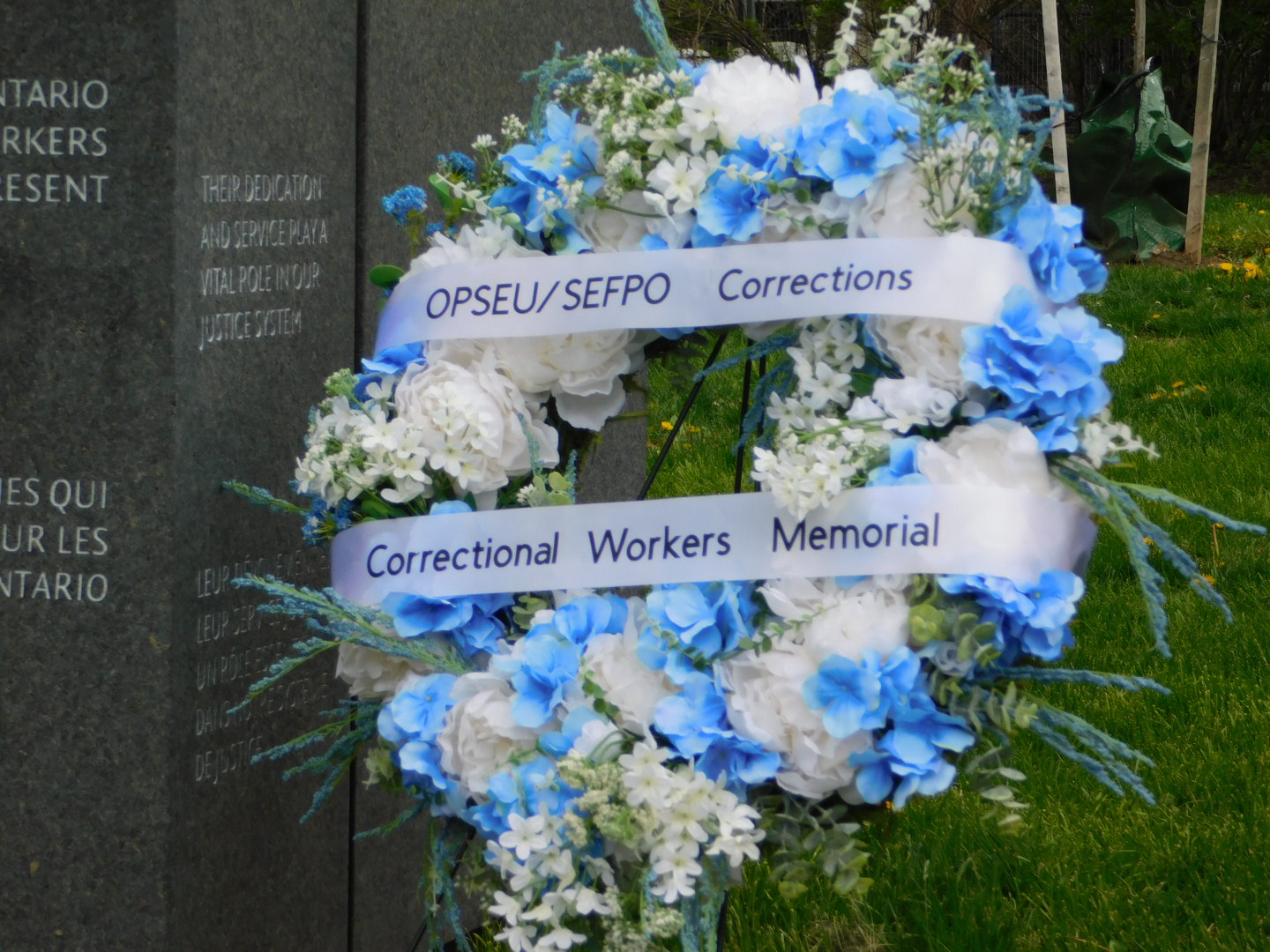
OPSEU/SEFPO proudly represents 10,000 provincial correctional staff in adult correctional facilities, youth centres, adult probation and parole offices, and youth probation offices across the province. They work for the Ministry of the Solicitor General (Corrections) and the Ministry of Children, Community and Social Services (Youth Justice).
Every year on the first week of May, correctional workers are recognized for their challenging, dangerous but important work in Ontario during Correctional Services Staff Recognition Week. During this week we reflect on their essential contribution to public safety in Ontario. This year, Correctional Services Staff Recognition is May 4-8.
Correctional Services Ceremony of Remembrance: Thursday, May 7, 2026
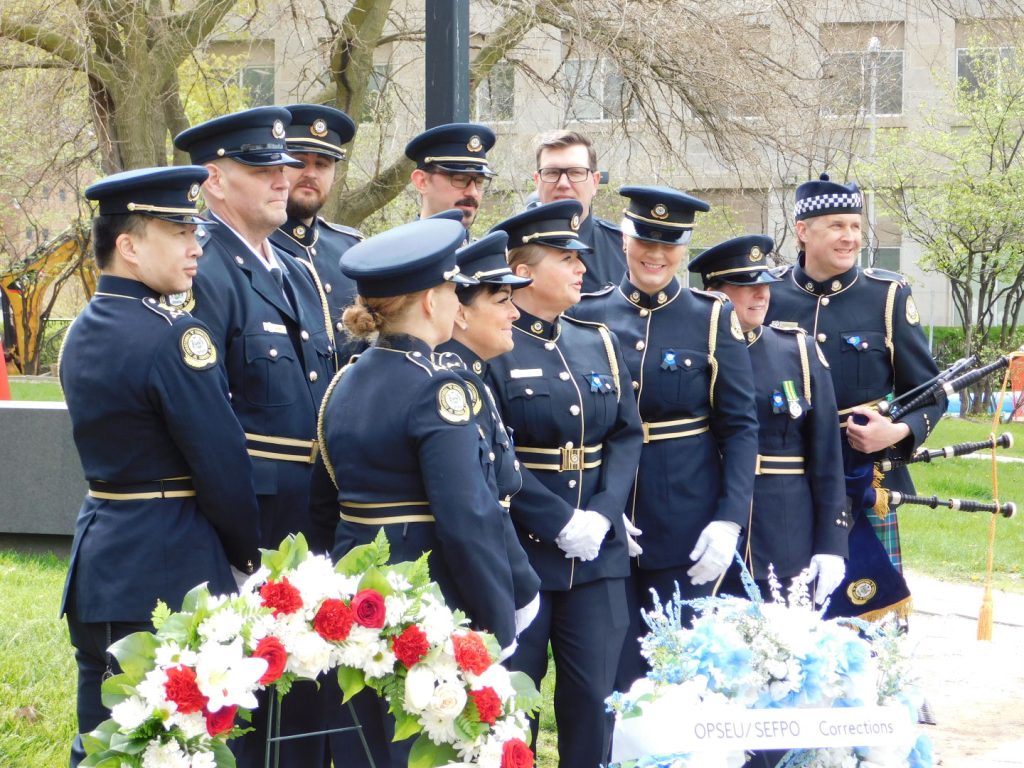
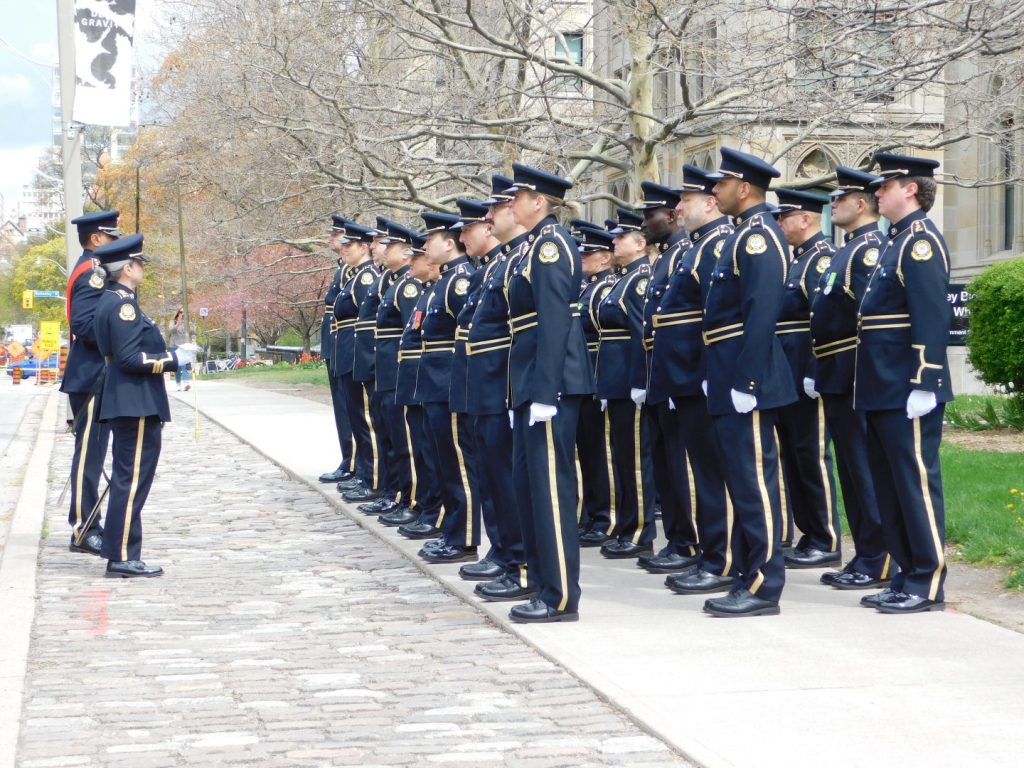
Every year during Correctional Services Staff Recognition Week, a Ceremony of Remembrance is held at Queen’s Park to pay tribute to correctional staff who have fallen in the line of duty.
Chad Oldfield, Chair of SolGen MERC was the Master of Ceremonies for the event and also gave an impassioned speech about the mental health crisis in corrections. Janet Laverty, Vice Chair of the MERC and Chair of the Bargaining Team participated in reading the roll call. OPSEU/SEFPO President JP Hornick also gave remarks honouring members we have lost and acknowledging the incredible work of our health and safety committees and bargaining unit leaders for their ongoing advocacy.
Photos

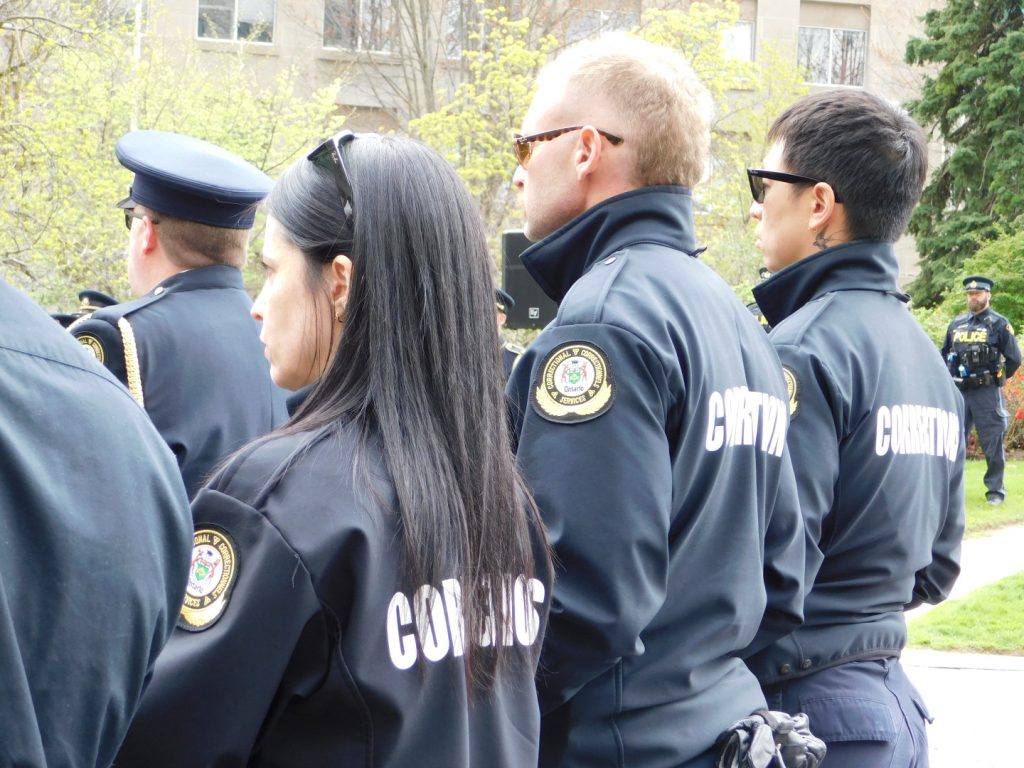
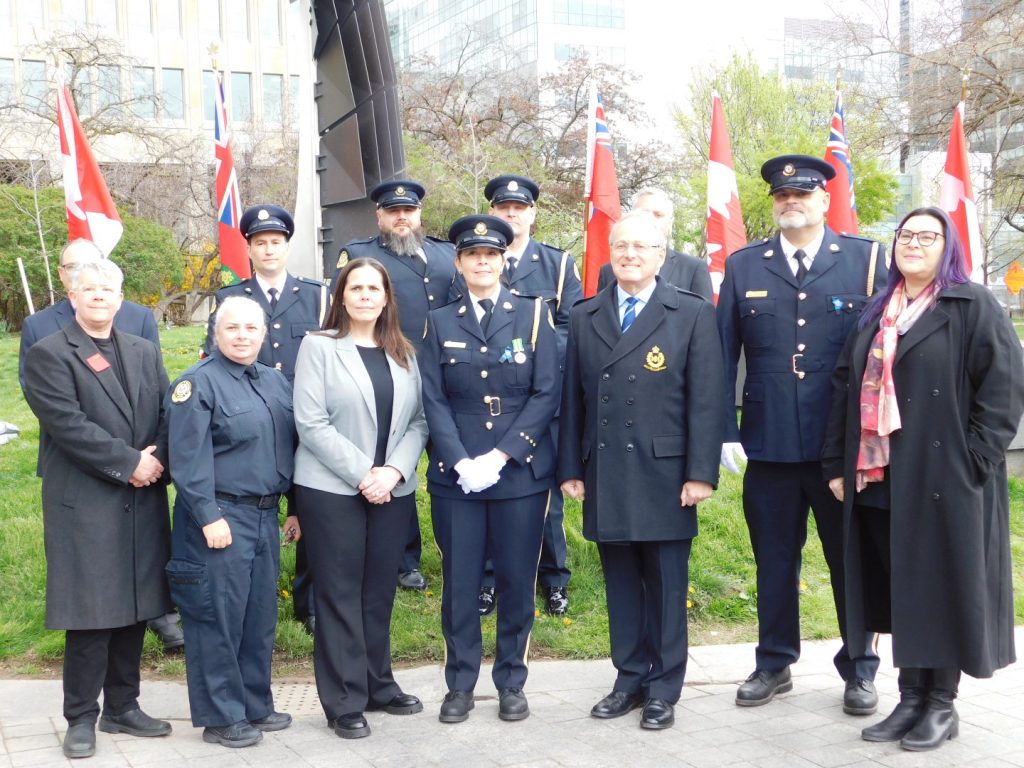
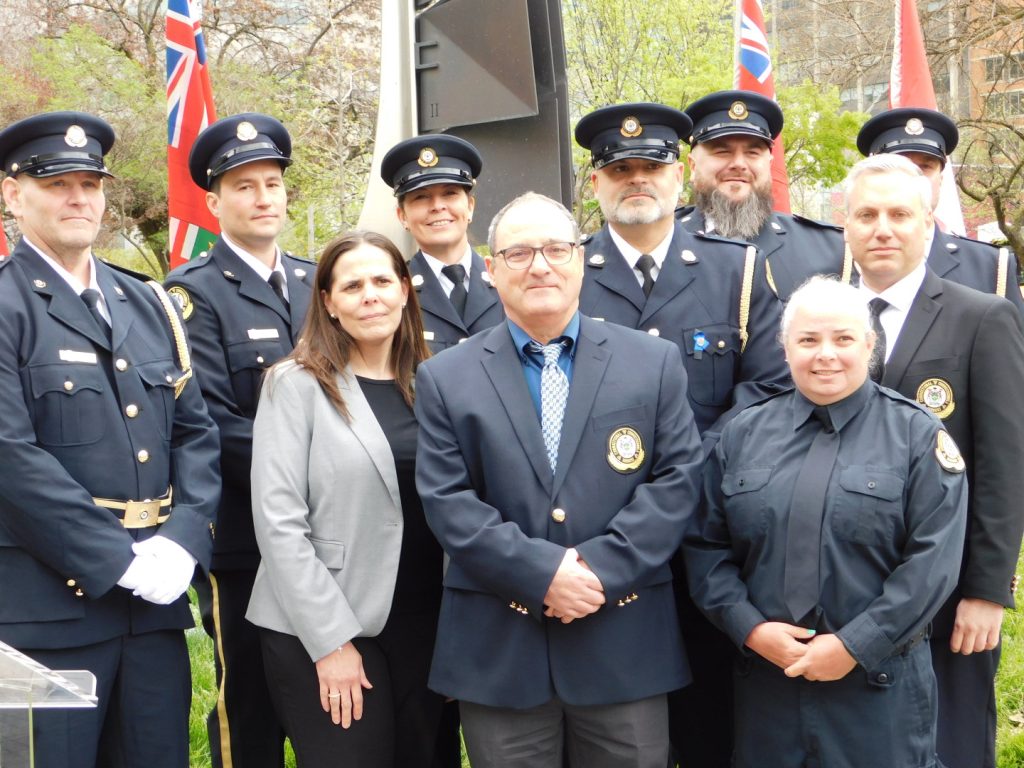
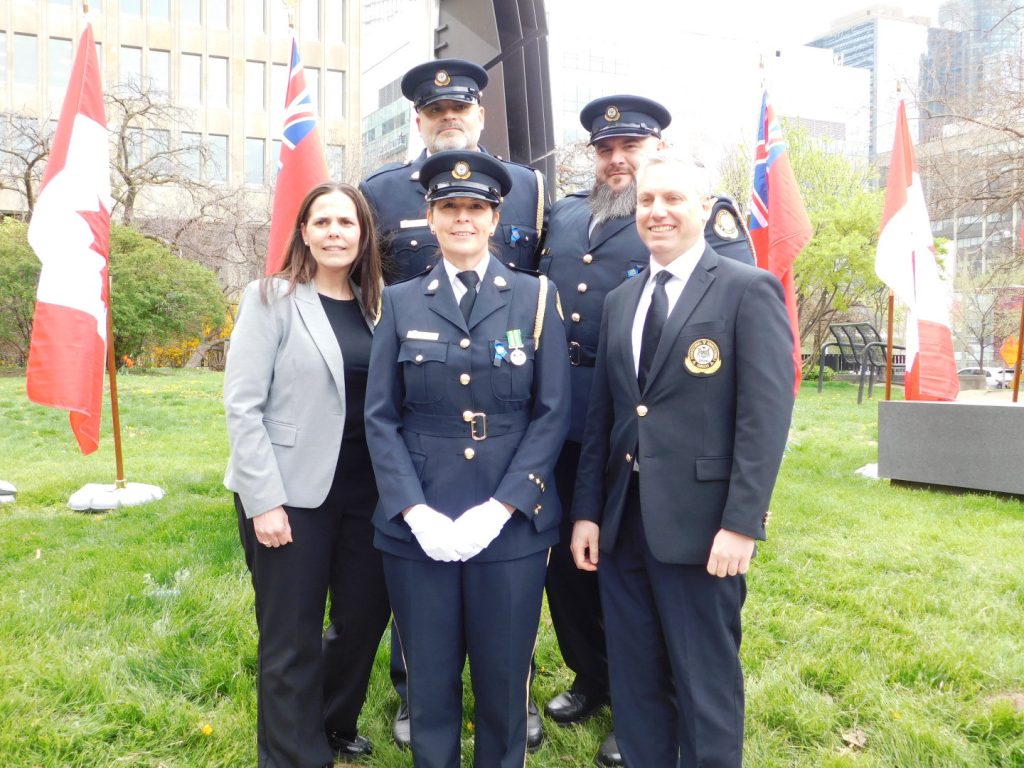
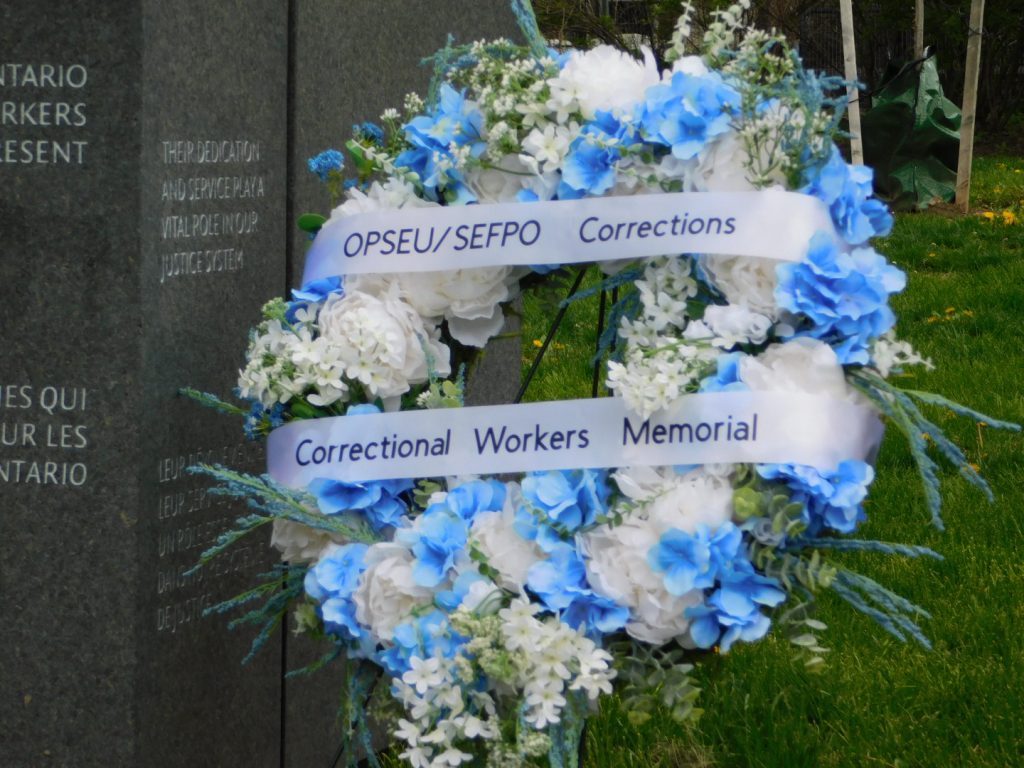
In challenging conditions, OPSEU/SEFPO Correctional Bargaining Unit members fight for better working conditions
There is no denying that the correctional system in Ontario faces a lot of challenges. Infrastructure issues, overcrowding, understaffing, year after year record breaking violence (including daily workplace violence against staff), overdoses, and deaths in custody have been problems for years. At the same time our members continue to work in overcrowded institutions and facilities, and with unsustainable caseloads in community corrections.
There is also a growing mental health crisis among correctional workers that has resulted in far too many suicides. The mental health impacts of correctional work are high and OPSEU/SEFPO has been advocating for concrete ways to ensure that these public servants have the supports they need to stay physically and psychologically healthy.
Here are some examples of the breadth of work correctional workers do across the province:
• Correctional workers in every position provide support to adults and youth in custody with a wide variety of needs, and who respond quickly and expertly every day to protect and save the lives of people who experience violence or overdose on toxic drugs.
• Correctional Officers do the complex job of maintaining safety within institutions while also meeting the individual care and rehabilitation needs of each inmate under their supervision.
• Probation and Parole Officers keep communities safe by monitoring offenders on community supervision, facilitate programming, and help offenders reintegrate into the community after incarceration, and Probation Officers who help youth do the same.
• Youth Services Officers provide support and care to youth in custody.
• Correctional Nurses provide health care services to adults and youth in custody whose physical and mental health care needs are growing in complexity.
• Rehabilitation Officers facilitate programming and prepare adults and youth in custody for life in the community.
• Social Workers, Psychologists and Addictions Counsellors help offenders with addiction and mental health issues that are so prevalent in incarcerated populations, and facilitate programming to reduce criminal behaviour.
• Recreation Officers help adults and youth in custody to find healthy and rehabilitative activities.
• Chaplains attend to the spiritual needs of people in custody from a vast variety of religious backgrounds.
• Cooks and kitchen staff prepare meals, and mentor inmates who are given the opportunity to work in the kitchen with them.
• Administrative staff work with fellow correctional staff and stakeholders to greet visitors and clients, review court records to properly admit and release inmates, provide administrative support, and generally keep the system running smoothly.
• Trade workers maintain the infrastructure in institutions and facilities, often while mentoring inmates assigned to their work details to gain skills.
• Volunteer Coordinators plan all aspects of volunteers coming in to provide programming and support to inmates.
• Custodial staff work hard to keep institutions clean.
This week we celebrate and recognize all the important work they do every day!