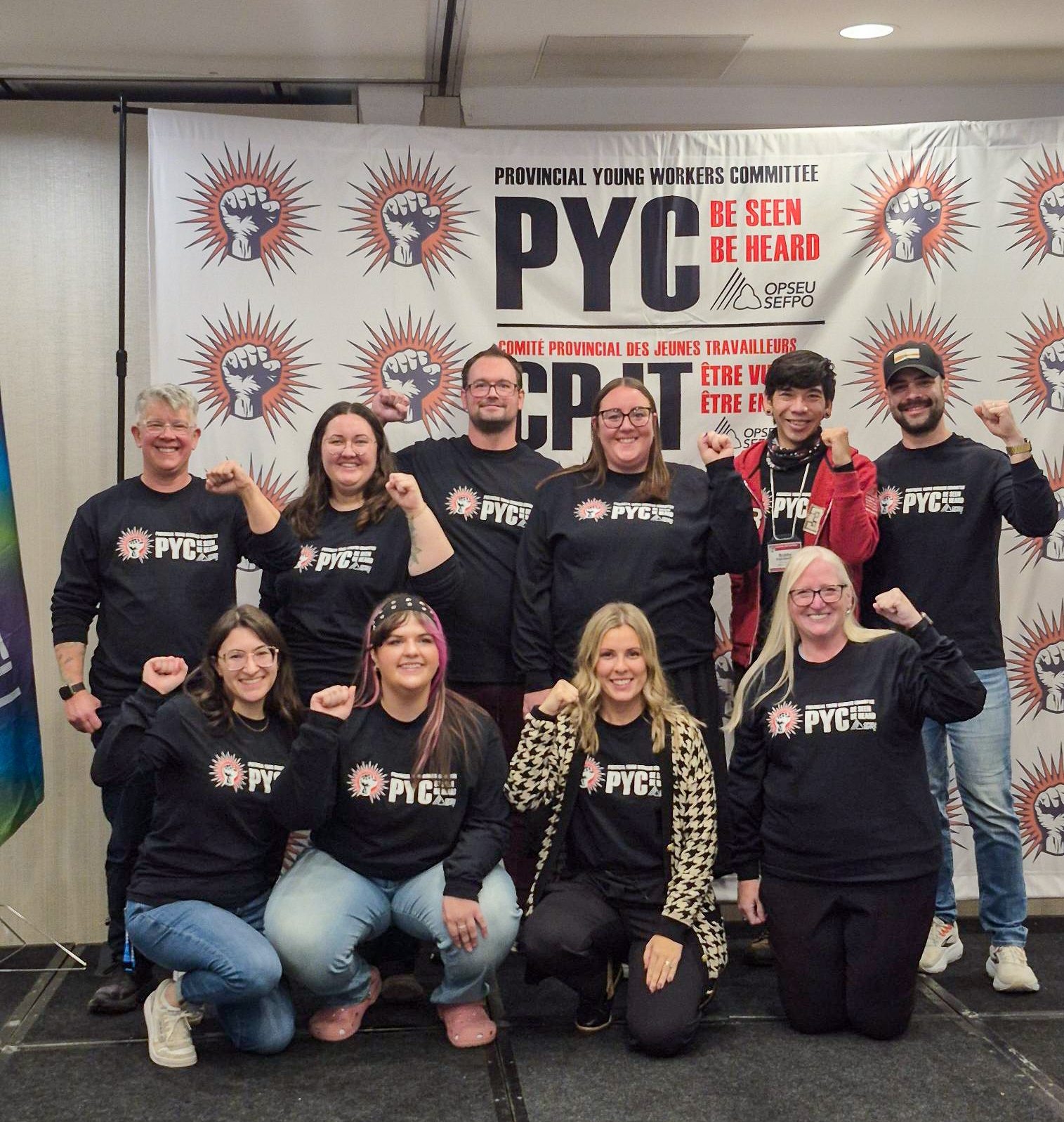
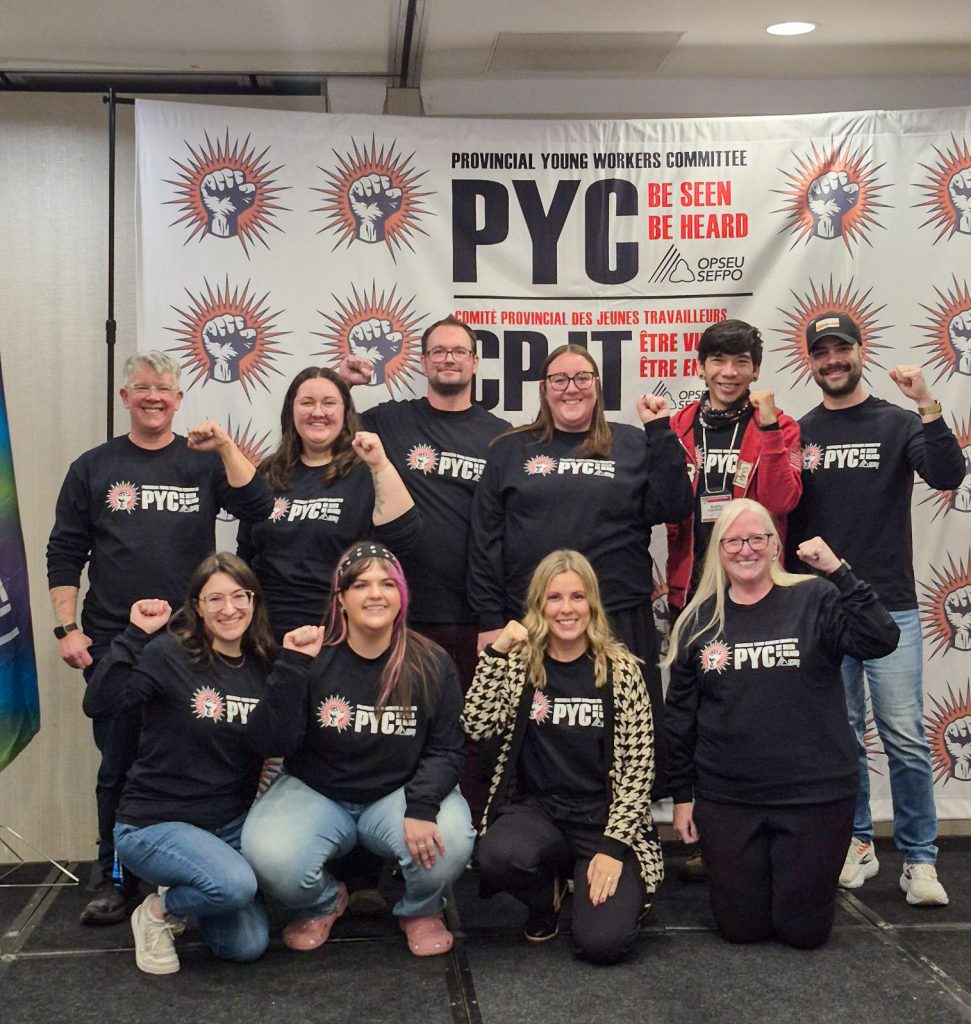
OPSEU/SEFPO young workers from across the province gathered from November 6-8, 2026 in Toronto for the Provincial Young Workers Committee (PYC)’s 2026 Young Workers Conference.
This year’s conference theme, Digital Activism: Artificial Intelligence and the Future of Work, invited reflection on the technological changes reshaping the labour market through AI – in particular, examining its impact on young workers and what an organized response might look like to ensure workers’ dignity and democratic input remain in the foreground.
OPSEU/SEFPO President JP Hornick joined delegates through the weekend, sharing salient remarks for our time during the conference opening:
The question before us is simple: What kind of future are we building with AI? Who is building it, and who are they building it for? The answers have implications for all facets of life: the future of work, education, political outcomes. But there is still room to shape these technologies and how they integrate into our lives, workplaces, and political organizing.
This is a critical moment to seize the initiative and turn an AI revolution in favour of working people. We don’t need to accept the logic of unprecedented scale and consumption to achieve advancement and progress.
We can have small-scale AI which is collectively owned and serves much of what our society actually needs—better health care and education, clean air and clean water. We can organize to secure and bargain for protections around AI, as well as democratic input into its use.
It’s up to us to determine if these technologies are going to be shaped to benefit the working class rather than AI power players who fashion these corporations as empires.
But here’s the thing about empires – every empire falls… This empire of AI is not infallible. The empire of AI is not exceptional. It is up to each and every one of us to engage in these conversations, to talk to one another, and to remember the one thing that AI doesn’t have that we have – our humanity.
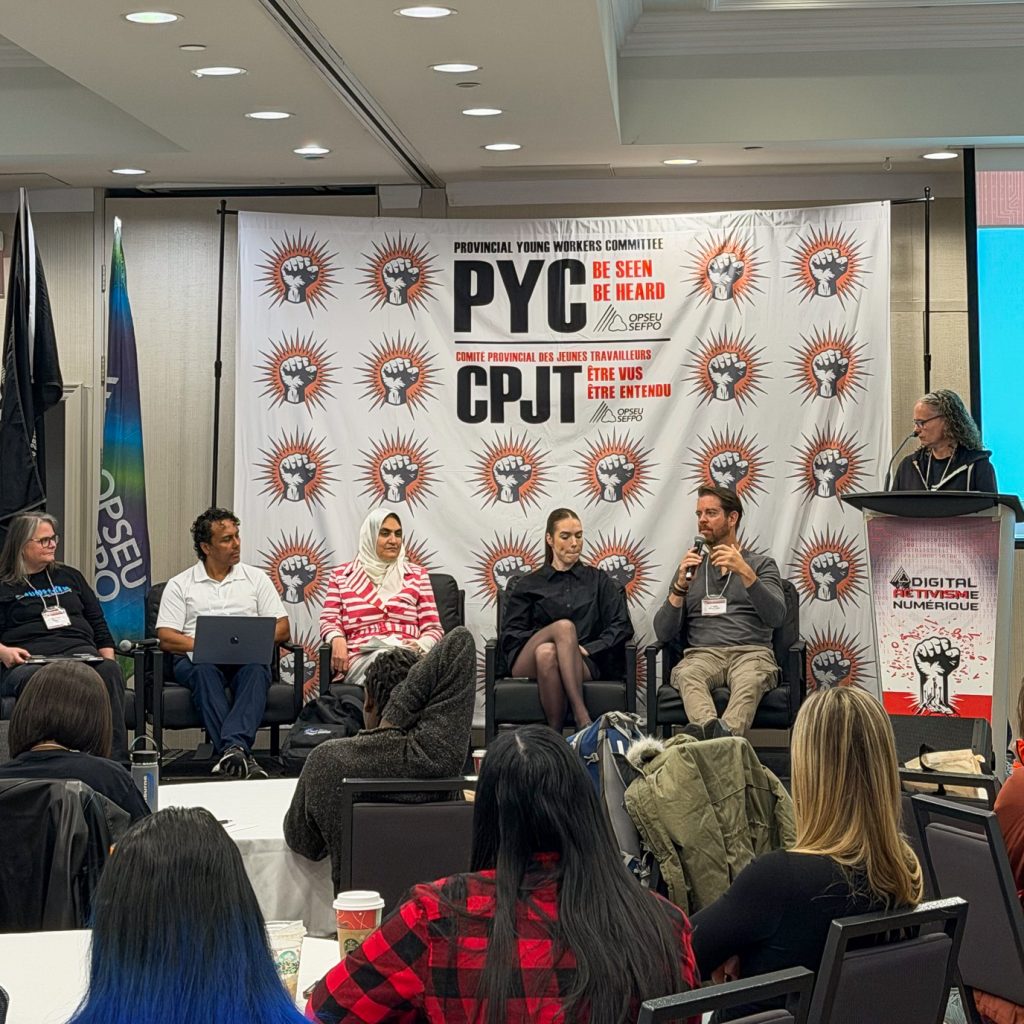
In addition to a member-driven Equity Panel discussion (Gillian Axten, Jordyn Garner, Richard Kellowan, Kevin MacKay, Dr. Neivin Shalabi, moderated by Marcia Steeves), delegates were joined by special guests illuminating this historical moment of technological change, including:
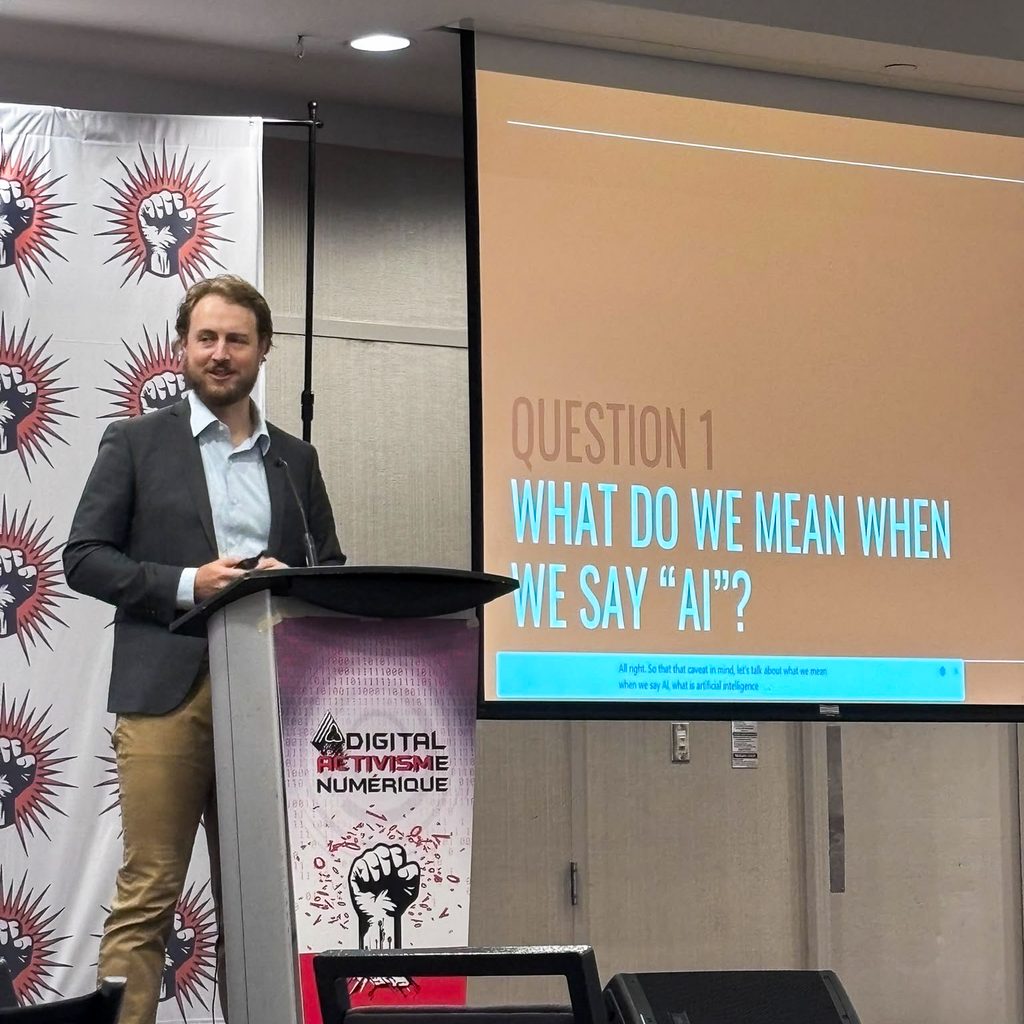
- Hadrian Mertins-Kirkwood, political economist at the Canadian Centre for Policy Alternatives (key note speaker);
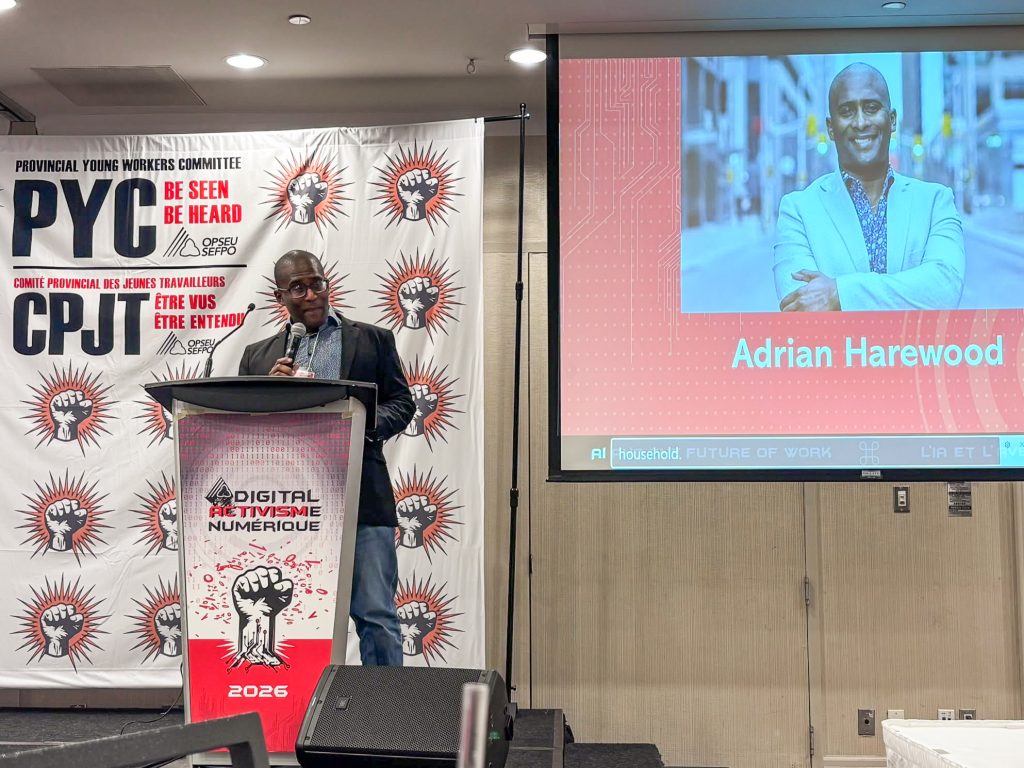
- Adrian Harewood, seasoned journalist and professor in Carleton’s School of Journalism and Communication;
- Amelie Ferrari, Union Steward and Bargaining Chair for Legal Aid Ontario;
- Tressa McKinnon, Local President for Legal Aid Ontario.